

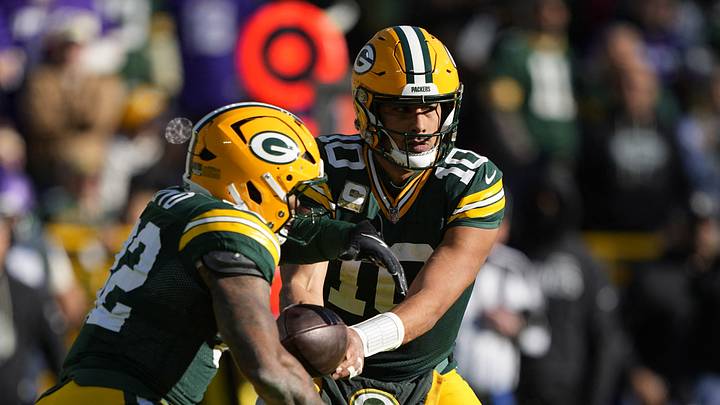
We're starting to get a much clearer picture of what the NFC playoff field might look like. There are plenty of talented teams in the conference, all hoping to make a deep playoff run and ultimately represent the NFC in the Super Bowl.
But every team has its concerns. Whether it's San Francisco's pass rush, questions about Detroit's defensive turnaround, or Green Bay's nonexistent run game, there are reasons to be skeptical of even the conference's top contenders.
Some of these concerns could be addressed over the final stretch of the regular season, while others might be much harder to fix. With that in mind, let's take a look at the biggest concern for each of the seven teams currently occupying a playoff spot in the NFC.
All advanced statistics courtesy of SumerSports
The biggest question facing each current NFC playoff team
1. San Francisco 49ers: Is the pass rush good enough to win a Super Bowl?
Through nine games, there hasn't been much to criticize about the San Francisco 49ers. They are 8-1, led by an offense that's been one of the NFL's best and a quarterback in Brock Purdy who's playing like an MVP candidate. And despite allowing 40 points, 439 yards of offense, and +0.22 EPA per play against the Cowboys on Sunday, their defense still ranks 11th in EPA per play and 12th in success rate on the season.
The pass rush numbers do stick out as a weakness and a potential concern for this team. San Francisco ranks 26th in pressure rate and 31st in sack rate. Raheem Morris hasn't been particularly aggressive about generating additional pressure through blitzing, either. The 49ers rank 22nd in blitz rate and rush only four on 71.4% of dropbacks, the 10th-highest rate in the league.
Nick Bosa returned in Week 9, while DeForest Buckner made his debut for the team that same week after being acquired during San Francisco's bye. Despite their additions, San Francisco's pressure rate hasn't improved over the last two games. In fact, it's decreased a tad, falling from 35.9% in Weeks 1-7 to 34.9% in Weeks 9-10.
Morris has blitzed even less over the last two weeks, with San Francisco's blitz rate dropping from 28.6% in Weeks 1-7 to 18.6% in Weeks 9-10. It's obviously a small sample size and game plan dependent, but by the numbers, the pass rush hasn't gotten any more intimidating with Bosa and Buckner on the field.
I'd expect this to improve as Bosa gets healthier and Buckner gets more comfortable with his new team and system, but if the 49ers fall short of a Super Bowl once again, their inability to consistently pressure opposing quarterbacks could be a big reason why.
2. Detroit Lions: Is Detroit's defensive turnaround sustainable?
This would've been a very easy choice a few weeks ago because the Detroit Lions' defense was one of the worst in football through the first seven weeks of the season. In their six games from Weeks 1-7, Detroit ranked 31st in EPA per play. But over the last three weeks, they've been fantastic.
From Weeks 8-10, the Lions rank sixth in EPA per play and fourth in success rate. As impressive as this turnaround has been, I'm still skeptical of how sustainable it is, especially when you look at the offenses Detroit has faced.
It started with the Minnesota Vikings in Week 8, who had one of the worst offenses in football at the time. Then came the Miami Dolphins in Week 9, who rank 24th in EPA per play and 30th in success rate. The New England Patriots figured to be a tougher test, but Drake Maye injured his ankle on the opening drive and missed the rest of the game.
So while the numbers have certainly improved, I'm not ready to say this defense has turned a corner just yet. And with Aidan Hutchinson, Detroit's best defensive player, suffering a season-ending knee injury on Sunday, there's even more reason to be concerned moving forward.
Hutchinson has been the team's most productive pass rusher, leading Detroit in pressures. Detroit faces the Chicago Bears on Thanksgiving, which should provide a good litmus test for whether this defensive resurgence is legitimate and how the Lions might fare against some of the league's best offenses come playoff time without Hutchinson.
3. New York Giants: Can they prove themselves against tougher competition?
The New York Giants' season looked all but over when Jaxson Dart went down with a season-ending knee injury in Week 2. But fast forward about two months, and the Giants are 5-3-1 and lead the NFC East by a game and a half.
How have they done it? Well, they traded for quarterback J.J. McCarthy, who's been promising in his first few starts, and their defense ranks in the top 10 in EPA per play and success rate.
What worries me about the Giants is the teams they've played so far, especially with how much tougher their schedule gets from here. Their first nine opponents have a combined winning percentage of .340, while the five teams they've beaten have a combined winning percentage of just .277.
Their remaining eight opponents have a combined winning percentage of .566, including matchups against the Jaguars, 49ers, and Lions. Still, it's hard not to be impressed with what the Giants have done so far, especially considering they lost their starting quarterback just two weeks into the season.
But can they prove to the league that they belong in the discussion of the NFC's top teams, or will they fizzle out of relevance as the schedule gets tougher? We should have an answer by the new year.
 Add us as a preferred source on Google